
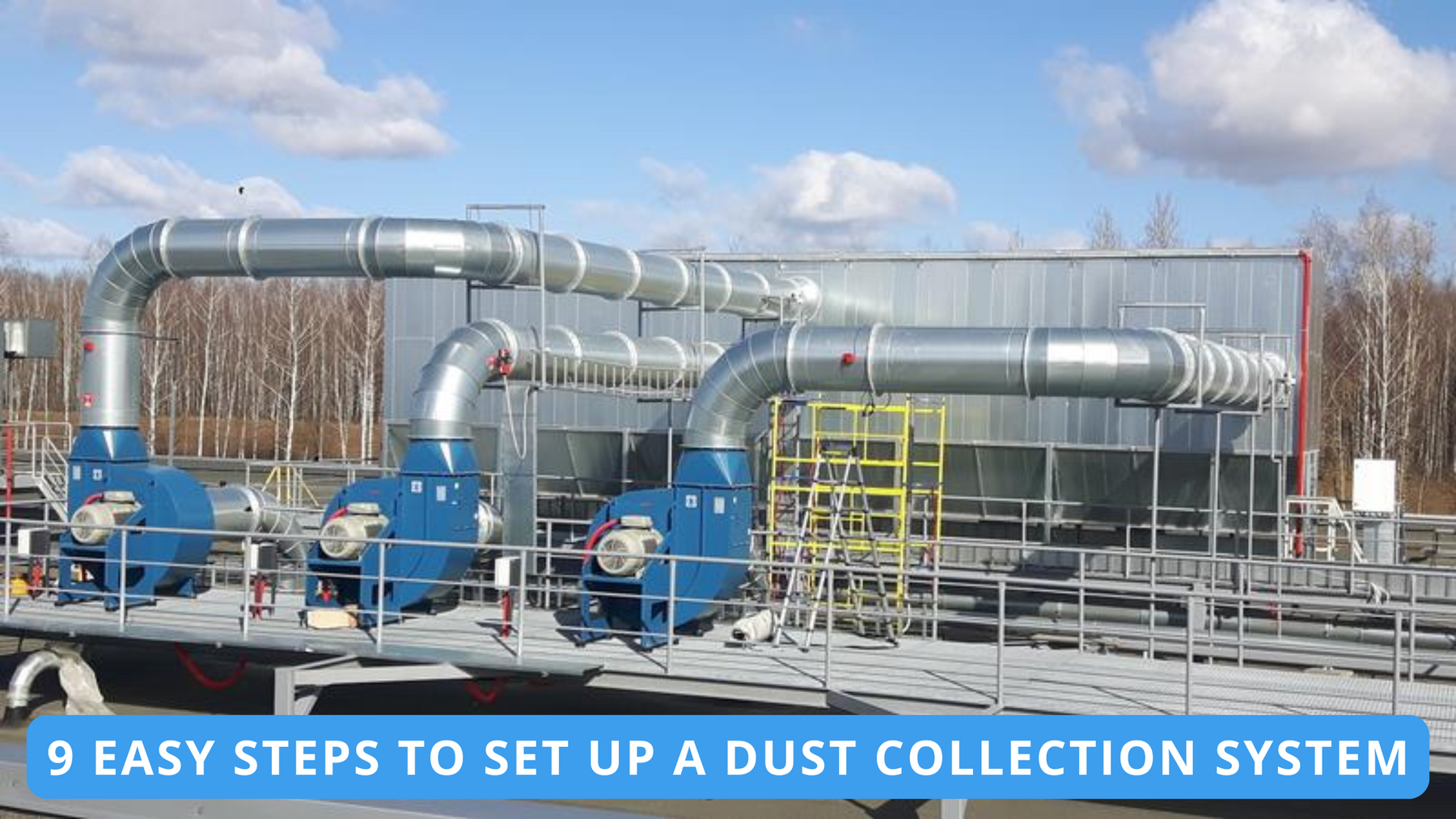
9 Easy Steps to Set Up a Dust Collection System

Setting up an efficient dust collection system is critical for creating a safer, cleaner, and more productive industrial environment.
The woodworking industry alone accounts for 1 in 5 combustible dust incidents worldwide (Dust Safety Science, 2022), highlighting the real risks at stake. From small shops to large-scale manufacturing facilities, effective dust control helps prevent respiratory issues, protects expensive machinery, and ensures compliance with OSHA and NFPA standards.
This step-by-step guide will walk you through setting up a compliant, high-performance dust collection system that performs efficiently from day one.
Why Dust Collection Matters: Key Industry Statistics
-
Safety Risk: The woodworking industry accounts for 1 in 5 combustible dust incidents worldwide (Dust Safety Science, 2022).
-
Worker Health: Facilities with high-efficiency dust collection systems report a 75% reduction in respiratory complaints (NIOSH).
-
Equipment Longevity: Regular dust removal can increase machine lifespan by up to 40%.
-
Productivity Boost: Facilities that upgraded to modern dust collection systems saw a 15-25% increase in worker productivity (Nederman case studies).

Impact on Equipment & Operations
Dust accumulation inside woodworking equipment can lead to:
-
Overheating and risk of fire
-
Malfunctions and unscheduled downtimes
-
Increased maintenance costs
-
Poor calibration and uneven wear on motors and bearings
A clean, dust-free workspace ensures:
-
Precision in machine operation
-
Reduced frequency of repairs
-
Better overall equipment efficiency

Compliance & Certification Requirements
OSHA Violations
-
OSHA has cited woodworking shops with fines exceeding $10,000 due to inadequate dust control.
-
Failing to implement compliant dust collection can lead to citations under 29 CFR 1910.22 (housekeeping) and 29 CFR 1910.94 (ventilation).
NFPA 664 Key Requirements
Dust Control & Housekeeping
-
Dust must not accumulate more than 1/8 inch (3.2 mm) over 5% of the floor or surface area.
-
Routine cleaning is mandatory.
Dust Collection Systems
-
Must be mechanically ventilated.
-
Required to:
-
Prevent dust accumulation
-
Be designed to withstand explosions or prevent them
-
Include grounded ductwork to reduce static charge ignition risk
Explosion Protection
-
For fine wood dust, systems may need:
-
Explosion vents
-
Deflagration isolation valves
-
Flameless venting or suppression systems
Air Recirculation
-
Recirculated air must be HEPA-filtered to avoid reintroducing fine particulates.
Spark & Fire Detection
-
Install spark detection systems that can trigger suppression or shut off equipment within milliseconds.
Dust Hazard Analysis (DHA)
-
NFPA requires facilities to perform a Dust Hazard Analysis to identify and address explosion risks.

Now that you understand the safety, productivity, and compliance implications of dust collection, let’s walk through the essential steps to set up an effective system for your facility.
Step 1: Assess Your Needs & Identify Dust Sources
Before purchasing or setting up a dust collection system, conduct a thorough assessment of your woodworking facility.
Identify all wood dust-generating processes: This includes sawing, routing, planing, jointing, sanding, drilling, shaping, carving, milling, and any other woodworking operations that release airborne wood particles.
Characterize the wood dust: Is it fine sawdust, wood chips, or a mix? Is it combustible (a critical safety consideration for wood dust)? The specific type and characteristics of your wood dust will significantly impact the type of dust collector and safety features you'll need.
Determine airflow requirements (CFM): Each piece of woodworking machinery will have a specific cubic feet per minute (CFM) requirement for effective dust capture. Consult your equipment manuals or industry guidelines (e.g., those from OSHA or NFPA for wood dust) to calculate the total CFM needed for your wood dust collection system. This is a critical step in sizing your system correctly.

Step 2: Choose the Right Dust Collection System Type
Based on your assessment, select the appropriate dust collection system. Common types of dust collection systems include:
-
Baghouse Dust Collectors: Excellent for heavy dust loads and various particle sizes.
-
Cartridge Dust Collectors: Ideal for fine dusts, offering high filtration efficiency in a compact footprint.
-
Cyclone Dust Collectors: Best for separating larger, heavier particles before finer filtration or for initial separation.
-
Wet Scrubbers: Suitable for hot, sticky, or combustible dusts and fumes.
-
Negative-pressure dust Collectors: These systems operate by creating a vacuum that pulls air through ductwork into the collector. They are highly effective at capturing dust at the source and are a popular choice for many industrial applications.

Step 3: Design Your Ductwork Layout
Proper ductwork design is paramount for the efficient installation of a dust collection system.
-
Minimize turns and bends: Each bend creates resistance, reducing airflow. Use long radius elbows where possible.
-
Maintain proper air velocity: Ensure air velocity is sufficient to keep dust suspended in the ductwork (typically 3,500-4,500 FPM for most dusts) to prevent settling and clogging.
-
Use appropriate duct materials: Smooth interior surfaces (like spiral pipe) reduce friction.
-
Branching: Design branches that connect to individual dust sources with minimal resistance and ensure balanced airflow to each pickup point.
Step 4: Select the Right Fan/Blower
The fan or blower is the heart of your dust collection system, responsible for moving the air.
-
Match CFM and static pressure: The fan must be capable of generating the required CFM at the calculated system static pressure (the resistance of the ductwork and collector).
-
Motor size: Ensure the motor is appropriately sized for continuous operation without overheating.
-
Fan type: Different fan types (e.g., backward-inclined, radial blade) are suited for various dust loads and pressure requirements.
Step 5: Position Your Dust Collector
Strategic placement of the dust collector impacts efficiency and maintenance.
-
Proximity to dust sources: Locate the collector as close as possible to the main dust-generating areas to minimize ductwork runs.
-
Accessibility for maintenance: Ensure easy access for filter replacement, bag emptying, and routine inspections.
-
Exhaust considerations: Plan for where the cleaned air will be exhausted (outdoors or recirculated indoors, if filtration allows and regulations permit).
Step 6: Install Ductwork & Hoods
This is where your design comes alive.
-
Secure mounting: Install ductwork securely, using appropriate hangers and supports to prevent sagging or vibration.
-
Proper sealing: Seal all duct joints and connections to prevent air leaks, which can drastically reduce system efficiency.
-
Effective capture hoods: Design and position capture hoods as close as possible to the dust generation point to maximize capture efficiency.
Step 7: Electrical and Control Connections
Connecting the system to power and controls is crucial for operation and safety.
-
Professional electrician: Always use a qualified electrician to wire the fan motor, control panel, and any associated safety interlocks.
-
Start-up and shut-down sequences: Implement controls that allow for safe and efficient system operation, including sequenced start-up and emergency shut-down.
-
Grounding: Ensure all components, especially those handling combustible dust, are properly grounded to prevent static electricity buildup.

Step 8: Filter Installation & Initial Check
Filters are the core of the dust collection system's ability to clean the air.
-
Install filters correctly: Follow manufacturer guidelines for installing filter bags, cartridges, or other media. Ensure a tight seal to prevent bypass.
-
Pre-start checklist: Before powering up, perform a thorough visual inspection of the entire system. Check all connections, ensure no tools are left in ducts, and verify damper positions.

Step 9: System Start-up & Balancing
The final step involves bringing the system online and optimizing its performance.
-
Initial power-up: Start the fan and monitor for unusual noises or viBrations.
-
Airflow verification: Use an anemometer or pitot tube to measure airflow at various points to confirm it matches design specifications.
-
System balancing: Adjust dampers as needed to ensure optimal airflow to each branch and dust pickup point. This is crucial for maximizing the efficiency of your dust collection system.
-
Training: Train operators on proper system use, maintenance, and safety procedures.

Beyond Setup: A Dust Collection System: Maintaining Your Dust Collection System
Once you have successfully set up a dust collection system, ongoing maintenance is key to its longevity and efficiency. Regular filter cleaning or replacement, fan inspection, and structural checks will ensure your system continues to provide clean air for years to come.

Conclusion:
A well-designed dust collection system isn't just a convenience, it’s a critical investment in the safety, efficiency, and compliance of your facility. From reducing respiratory issues and preventing equipment damage to avoiding costly OSHA violations, each step you take toward better dust control pays off in long-term performance and peace of mind.
Ready to set up your ideal dust collection system? Contact us today or explore our products here.
About the Author
Rob Howell is the President of WSI Machinery and a recognized industry expert in dust collection systems and industrial air filtration. His leadership and extensive experience are dedicated to helping businesses achieve cleaner, safer, and more efficient operations.

Leave a comment