
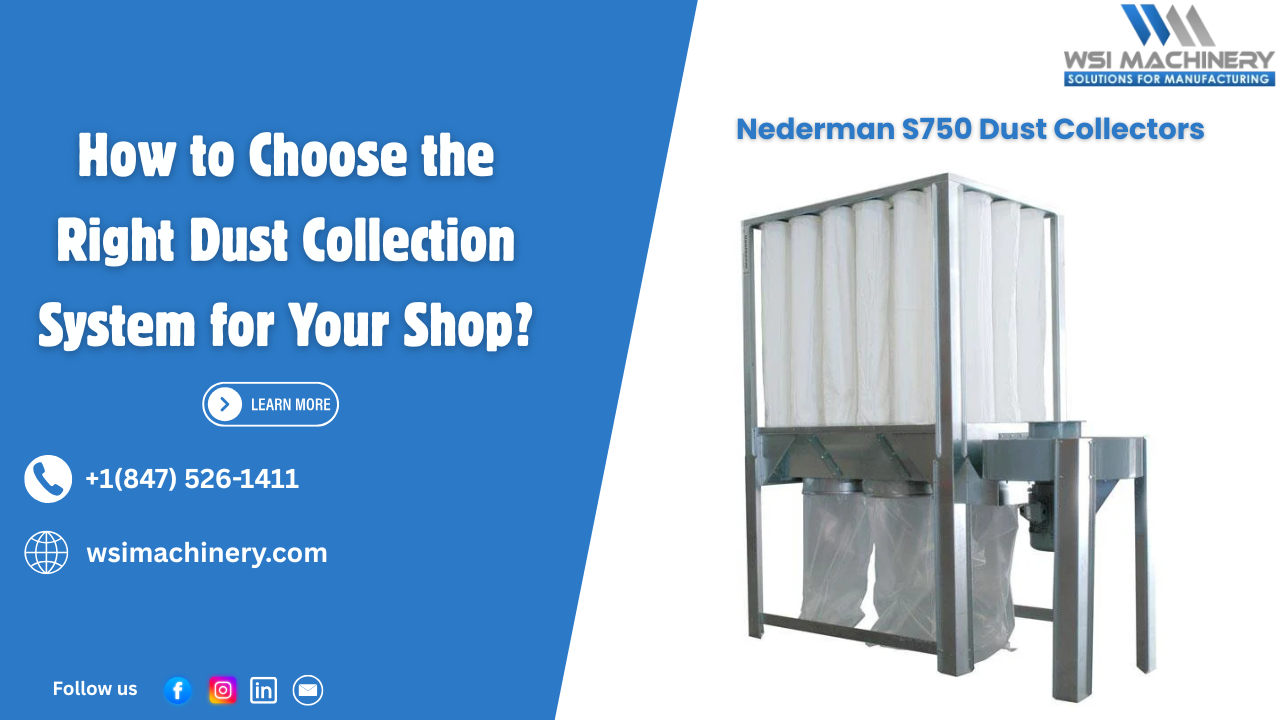
How to Choose the Right Dust Collection System for Your Shop?

Not every workshop is built the same. Some of you are in a small workshop packed to the gills, and some might have a full-on manufacturing facility.
Start with the real questions:
-
How many machines do you run at once?
-
Are you constantly moving stuff around, or is your layout pretty set?
-
How much dust is being produced in a week?
-
How often do you stop mid-project just to clean up?
There's no need to overthink it. Upgrading your dust collection system could be the simple solution you’re looking for.
Key Features to Consider
How to Upgrade Your Dust Collection from Adequate to Outstanding? Here are some key features to consider:
-
Filter Size: Look for something that grabs the smaller particles, like 1-micron. Because it’s not the big chunks that cause problems, it’s the fine dust that stays in the air.
-
CFM (Cubic Feet per Minute): This tells you how much air the system moves. More tools and more power are needed.
-
Noise Level: Look for a system that keeps noise levels reasonable and doesn’t interfere with communication.
-
Waste Disposal: Different options for containers are available from bags that can be disposed of directly, bins that can be dumped, or even transferred by blower into large exterior containers.
-
Footprint: Once CFM determination is made, choose a unit that works with your space and can handle your needs.
If you’d like more information, reach out to one of our specialists, or check out more content on setting up a dust collection system here.
Types of Dust Collectors

-
Indoor Dust Collectors: Perfect when outdoor systems aren’t necessary. Units like the Nederman S Series are compact, quiet, and ideal for shops where space and safety standards matter.
-
Single-Stage Collectors: Basic but effective. Everything goes into one bag. Great for solo setups.
-
Two-Stage / Cyclone Collectors: Separate out the big chunks first, so filters stay cleaner longer.
-
Portable Units: Roll them around and plug them into different machines.
-
Industrial Dust Collection Systems: You’ll know when you need one. High production facility, commercial-scale production? This is where you go.
If you’d like to explore these options further, check out the options over at WSI Machinery’s Dust Collectors Page.
Workflow Integration
You’ll want your dust collection to be more of an efficiency move than a chore. Some of the features below can help with this:
-
Add blast gates at each machine so you’re not wasting suction.
-
Quick-connect modular fittings make shop layout changes simpler.
-
Remote start will be a total game-changer.
Think of your dust system as your assistant. It should do the job without needing constant supervision. Proper care and maintenance can help to achieve this.
Placement Tips:
-
Place it as close to the machinery as possible.
-
Make sure you can access all the parts that need maintenance.
-
Ensure there is enough space to safely remove collected dust for disposal.
-
Try to reduce bends in your ducting to maximize airflow and efficiency.
When Should Shops Switch to Central Outdoor Dust Collection Units?

-
Standalone units fall behind: Too many machines running at once can overwhelm smaller collectors.
-
Cleaner, safer floors: Say goodbye to hoses, cords, and pipes cluttering your shop.
-
Quieter work environment: Moving the noise outside drastically reduces the sound level indoors.
-
Labor-saving waste removal: Instead of emptying small bags or bins constantly, large outdoor hoppers can handle more dust for longer without the hassle.
Indoor Dust Collection That Meets Safety Standards
Systems like the Nederman S-Series are worth looking into.
These indoor units are popular because they’re:
-
Compact, quiet, and powerful
-
Designed with built-in features that support NFPA compliance
-
High filtration to footprint ratio
Why NFPA matters: If you’re collecting fine, combustible dust (like wood dust), you need to comply with the National Fire Protection Association (NFPA) standards. These guidelines help reduce the risk of fire or explosion in enclosed workspaces.
WSI Machinery specializes in dust collection systems that are safe, compliant, and made to fit a variety of shop sizes. If you have questions about meeting safety codes or choosing the right fit, our team is always ready to help.
Conclusion

So, when someone brings up the whole "How to Choose a Dust Collection System?" thing, now you’ve got a solid answer.
No matter if you’re just starting out or scaling up with industrial dust collection systems, there’s something out there that fits you.
If you're looking for reliable systems and expert support, check out the range at WSI Machinery. We’ve got everything from compact collectors to heavy-duty setups, all designed to help you breathe easier and work cleaner. Invest in a solution that best fits your needs.

Leave a comment